Red Green Plaid Christmas Clipart: A Designer’s Review
As an embroidery designer who has spent countless hours digitizing and testing files for real-world application, I approach every new asset with a critical eye. We are not just looking for pretty pictures; we are looking for stitchability, commercial viability, and aesthetic longevity. When I first loaded the Red Green Plaid Christmas Clipart into my workspace, my immediate reaction was one of cautious optimism. The classic color pairing is timeless, but plaid patterns can be notoriously difficult to translate from flat digital illustrations into textured thread work. This review breaks down how this specific design holds up under the needle, offering practical insights for fellow designers, Etsy sellers, and craft business owners.
First Impressions: Mood and Visual Personality
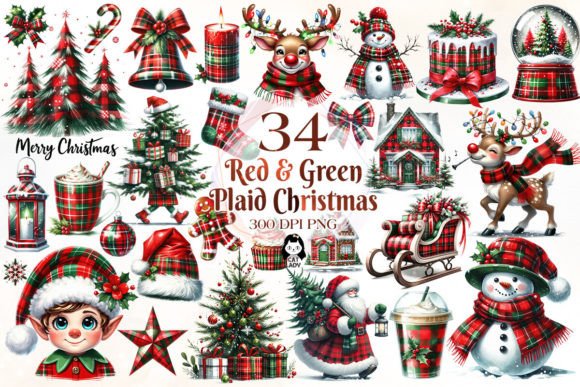
The initial visual impact of the Red Green Plaid Christmas Clipart is undeniably festive without being overly chaotic. In the realm of Illustrations, plaid can often feel busy, but this design maintains a clean structure that suggests it was created with vector precision. For an embroidery project, this clarity is crucial. The mood it evokes is cozy, traditional, and warm—perfect for the holiday season. It does not scream for attention with neon brightness or complex gradients; instead, it relies on the strong contrast between the deep reds and forest greens. This simplicity is a strength. It means the design is versatile enough to sit comfortably on a high-end boutique product or a playful children’s item without feeling out of place.
From a layout perspective, the balance feels right. Whether you are using this as a central motif or a decorative accent, the proportions allow for breathing room. For those of us creating design assets for small shop products, having a clipart element that doesn’t require heavy manipulation to look professional is a significant time-saver.
Real-World Application: From Screen to Stitch
To truly evaluate a machine embroidery design, you have to imagine it on fabric. I recently worked on a custom order for a set of holiday tote bags, and this clipart became the focal point of my material selection process. The tote bag design required something that would read clearly from a distance but still hold up to close inspection. The Red Green Plaid Christmas Clipart performed exceptionally well here. Because plaid relies on intersecting lines, the transition from digital pixel to physical thread requires careful attention to stitch density.
In this scenario, I found that the design works best when treated with a mix of satin stitch borders and lighter fill stitch interiors. If you attempt to fill the entire plaid pattern with dense stitching, you risk creating a stiff, cardboard-like patch on your fabric. Instead, using the clipart as a guide for strategic stitching allows the fabric texture to show through slightly, keeping the finished product soft and wearable. This approach is particularly effective for sweatshirt embroidery, where comfort is just as important as aesthetics. Customers buying a custom holiday sweatshirt want to feel the warmth of the garment, not the weight of the thread.
For baby embroidery projects, such as onesies or bibs, the scale of the clipart matters. I recommend resizing the design to ensure the individual plaid squares do not become so small that they merge into a muddy blob. On smaller items, simplifying the detail level ensures that the thread colors remain distinct and vibrant. This attention to detail builds customer trust and enhances the perceived value of your handmade product.
Navigating Technical Challenges
While the Red Green Plaid Christmas Clipart is visually appealing, it is not without its technical quirks. Plaid patterns are essentially grids, and grids can be tricky on curved surfaces. If you are applying this design to a cap or a rounded pillow cover, you must account for distortion. The straight lines of the plaid may warp if the hoop size is not stabilized correctly. I strongly advise using a cut-away stabilizer for stretchy fabrics like jersey knits or fleece. Without proper support, the tension of the machine can pull the fabric, causing the plaid lines to bow and ruining the geometric integrity of the design.
Another consideration is the choice of fabric color. While red and green are bold, placing them on dark navy or black fabric can reduce contrast, making the design lose its punch. Conversely, on white or cream linen, the colors pop beautifully. I always test my embroidery file on scrap pieces of the actual production fabric before committing to the final run. This step is non-negotiable for professional commercial embroidery work. It allows you to adjust thread tension and check for any puckering issues that might arise from the specific interaction between the thread and the material.
Additionally, be mindful of tiny lettering or intricate corners if the clipart includes any text elements or sharp angles. These areas are prone to thread breaks or loose ends if the digitizing is not optimized. If you are converting this illustration into an applique design, ensure that the tack-down stitches are secure, especially if the final item will undergo frequent washing.
Commercial Viability and Brand Consistency
For Etsy sellers and creative entrepreneurs, the versatility of this clipart is a major selling point. It fits seamlessly into a variety of product lines, from kitchen towels to nursery decor. The traditional aesthetic appeals to a broad demographic, making it a safe yet stylish choice for personalized gifts. When used in printable mockups or digital previews, the clean lines of the plaid help create a professional presentation that attracts buyers. It signals quality and attention to detail, which are key drivers in consumer decision-making.
However, always verify the licensing terms before using the digital embroidery file for commercial purposes. Understanding whether you can sell the finished physical items or if there are restrictions on digital redistribution is crucial for protecting your craft business. Assuming all rights are cleared, this design can be a valuable addition to your library of holiday embroidery assets. It offers a fresh take on a classic theme, allowing you to create unique custom apparel and home goods that stand out in a saturated market.
Practical Designer Notes
- Test on Scrap Fabric: Always run a test stitch-out to check for puckering and thread breaks.
- Check Thread Contrast: Ensure your red and green threads have enough contrast against the background fabric.
- Review Stitch Density: Avoid overly dense fills to maintain fabric drape and softness.
- Confirm Hoop Size: Make sure the design fits comfortably within your hoop without excessive re-hooping.
- Inspect Small Details: Zoom in to ensure small plaid intersections are digitized cleanly.
- Use Proper Stabilizer: Match the stabilizer type to the fabric weight and stretch.
- Verify Licensing: Confirm commercial use rights before selling finished items.
In conclusion, the Red Green Plaid Christmas Clipart is a solid contender for your holiday design roster. It requires a thoughtful approach to digitizing and stitching, but the results are worth the effort. By paying attention to fabric choice, stabilization, and stitch technique, you can transform this simple illustration into a high-quality embroidered patch or garment feature that delights customers and elevates your brand. It is a reminder that even the most traditional motifs can feel fresh and modern when executed with professional care and creative insight.