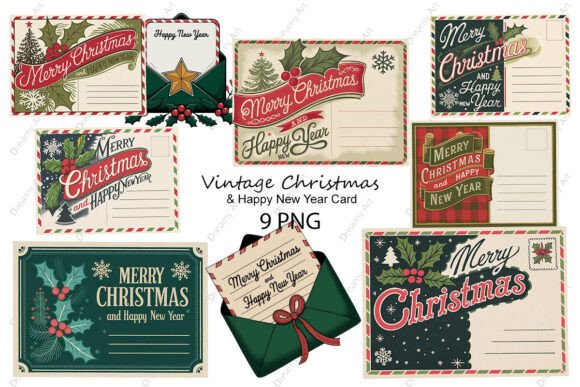
Vintage Christmas Card: Festive Illustrations
As a graphic designer who has spent over a decade refining brand identities and crafting seasonal campaigns, I approach every new asset with a critical eye. We are not just looking for pretty pictures; we are looking for functional tools that solve visual problems. Recently, I evaluated the Vintage Christmas Happy New Year Card for a potential client project involving a boutique artisanal chocolate brand. The goal was to create a cohesive holiday campaign that felt nostalgic yet premium. Here is my professional breakdown of how this asset performs in real-world design scenarios.
First Impressions and Visual Mood
The immediate impact of the Vintage Christmas Happy New Year Card is its ability to evoke warmth and tradition. In an era where modern design often leans toward minimalism and stark geometry, this piece offers a welcome return to ornate, hand-crafted aesthetics. The visual elements suggest a mid-20th-century influence, characterized by rich textures and classic typography. For a designer, this sets a very specific tone: it is inviting, trustworthy, and deeply rooted in heritage.
This mood is crucial for certain types of clients. If you are working with a handmade business or a local bakery, this aesthetic bridges the gap between the product and the consumer’s emotional memory of holidays past. It does not scream for attention with neon brightness; instead, it draws the viewer in with subtlety and charm. This makes it an excellent choice for brands that want to emphasize quality and history over trendiness.
Strategic Applications in Client Projects
When integrating this graphic design asset into a broader campaign, versatility is key. I tested the visual components across several mediums to determine where they shine brightest. For packaging design, the intricate details work beautifully on box sleeves or hang tags. The vintage style complements kraft paper and matte finishes, creating a tactile experience that enhances perceived value.
In the realm of social media graphics, this asset serves as a strong hero image. Whether used for Instagram posts or Pinterest pins, the distinct style stops the scroll. It provides a clear focal point that allows marketers to overlay minimal text without cluttering the composition. For Etsy product listings, using this illustration in mockups can significantly boost click-through rates for sellers offering holiday bundles.
Furthermore, for those utilizing cutting machines, this design translates well into a Cricut project. When converted into an SVG design, the clean lines allow for precise cutting on cardstock or vinyl. This opens up possibilities for sticker design, custom gift tags, and even iron-on transfers for t-shirt design. However, designers must ensure that fine details are simplified for smaller cuts to maintain integrity.
Where the Asset Excels
The Vintage Christmas Happy New Year Card performs best when given space to breathe. It is ideal for large layout areas such as poster headers, invitation covers, and website banners. In these contexts, the illustration acts as a primary anchor, establishing the theme immediately. It also works exceptionally well in editorial design, such as holiday newsletters or blog visuals, where it can break up text and add visual interest.
For print-on-demand sellers, this asset is a strong candidate for mugs and tote bags. The nostalgic appeal resonates with buyers looking for unique, non-generic holiday gifts. When placed on a product mockup, the design retains its clarity and charm, suggesting a high-quality final print. It supports small business branding by adding a layer of personality that stock photography often lacks.
Constraints and Careful Usage
While versatile, this asset is not a universal fix. Designers should use it carefully in small sizes. The intricate details that make it charming at large scales can become muddy or illegible when shrunk down for favicon use or small footer icons. It is also less suitable for crowded layouts. Because the vintage style carries significant visual weight, pairing it with too many other elements can disrupt the visual hierarchy.
Avoid using this illustration in projects requiring a ultra-modern, corporate, or tech-forward aesthetic. It clashes with minimalist branding that relies on sans-serif fonts and ample white space. Additionally, be cautious with low-contrast backgrounds. If the illustration has subtle tonal variations, placing it on a busy or similarly colored background will reduce its impact and readability.
Impact on Brand Perception and Hierarchy
Integrating the Vintage Christmas Happy New Year Card affects more than just aesthetics; it influences brand perception. It signals authenticity and care, which builds visual trust with the audience. For a brand identity, consistent use of such illustrations can enhance recognition and emotional appeal. However, it must align with the overall brand voice. If a brand is known for innovation and futurism, this asset may confuse the message.
In terms of hierarchy, this illustration should typically serve as the primary or secondary element. It draws the eye first, so subsequent text elements must be chosen carefully to complement rather than compete. A classic serif font often pairs well, echoing the traditional vibe, while a clean sans-serif can provide a contemporary contrast if used sparingly.
Practical Designer Notes and Technical Checks
Before delivering this asset to a client or using it in a commercial project, several technical checks are essential. First, test the design in black and white. This ensures that the core shapes and contrasts hold up without color, which is vital for cost-effective printing methods. Next, check contrast on both light and dark backgrounds. Vintage illustrations often rely on specific color palettes, so verifying legibility across different mediums is crucial.
Preview the asset at various sizes. What looks sharp on a desktop monitor may pixelate on mobile devices if the resolution is insufficient. If using a PNG design, inspect the transparency edges to ensure there are no halos or jagged lines. For vector users, confirm the editability of the SVG design. Can you easily change colors? Are the paths closed and clean?
Finally, always confirm the commercial license. Whether you are creating a Canva template for resale or designing marketing visuals for a corporate client, understanding usage rights is non-negotiable. Ensure that the digital product you are purchasing allows for the intended scale of distribution. By treating this creative design with professional rigor, you transform a simple illustration into a powerful tool for small business branding and successful holiday campaigns.